
 EN
EN
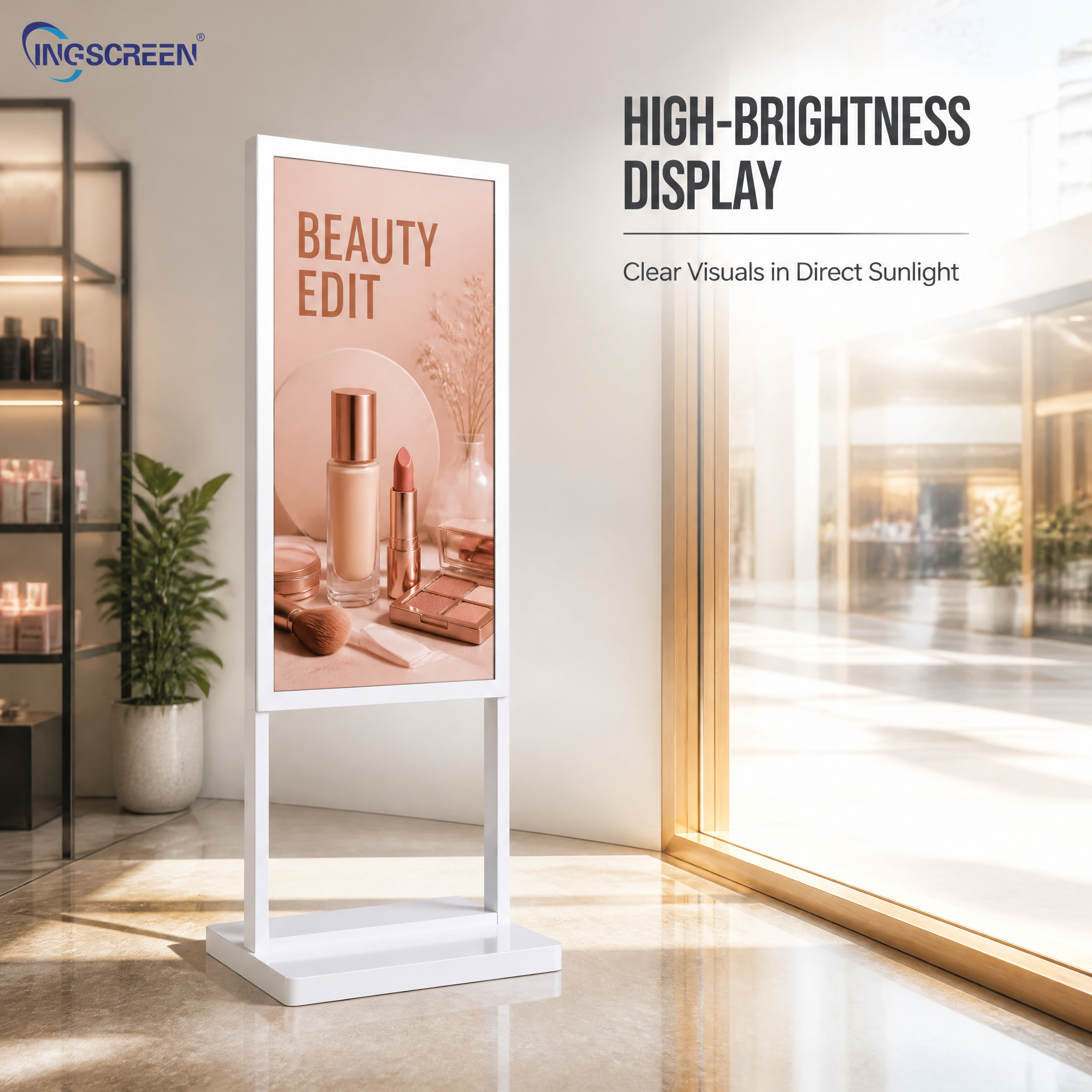
A store window is the most competitive display position you own. Shoppers see your screen in direct sun, at an angle, through glass, in the middle of a street full of reflections. Standard indoor signage rated for a bright office lobby will look washed out before noon. Specifying high brightness digital signage for window display and for genuine outdoor installation is therefore a different procurement exercise from buying indoor screens — and it is one where the specification mistakes are expensive, because the fix is not a setting, it is a replacement unit.
First, Separate Window Displays From True Outdoor Units
Buyers often use the two terms interchangeably, and suppliers let them. Define which one you are buying:
• Window-facing displays sit indoors or in a semi-enclosed recess, behind glass, and are exposed mainly to solar load, heat build-up and reflection rather than rain.
• Outdoor displays face weather directly and must be sealed, drained, cooled and structurally mounted for wind load, dust, water and temperature extremes.
That distinction determines IP rating, cooling architecture, housing material and price. Get it wrong in the specifications, and either you pay for weather protection you do not need or you install an indoor screen in a hostile position.
Brightness, Contrast and Reflection
Brightness is measured in nits. The number that matters is not the panel's peak figure but the usable brightness after the front glass or protective layer, in the actual lighting direction of your site. A display that is legible at 1,500–2,500 nits facing a shaded arcade may be unreadable at double that figure in direct sun with no anti-reflective treatment.
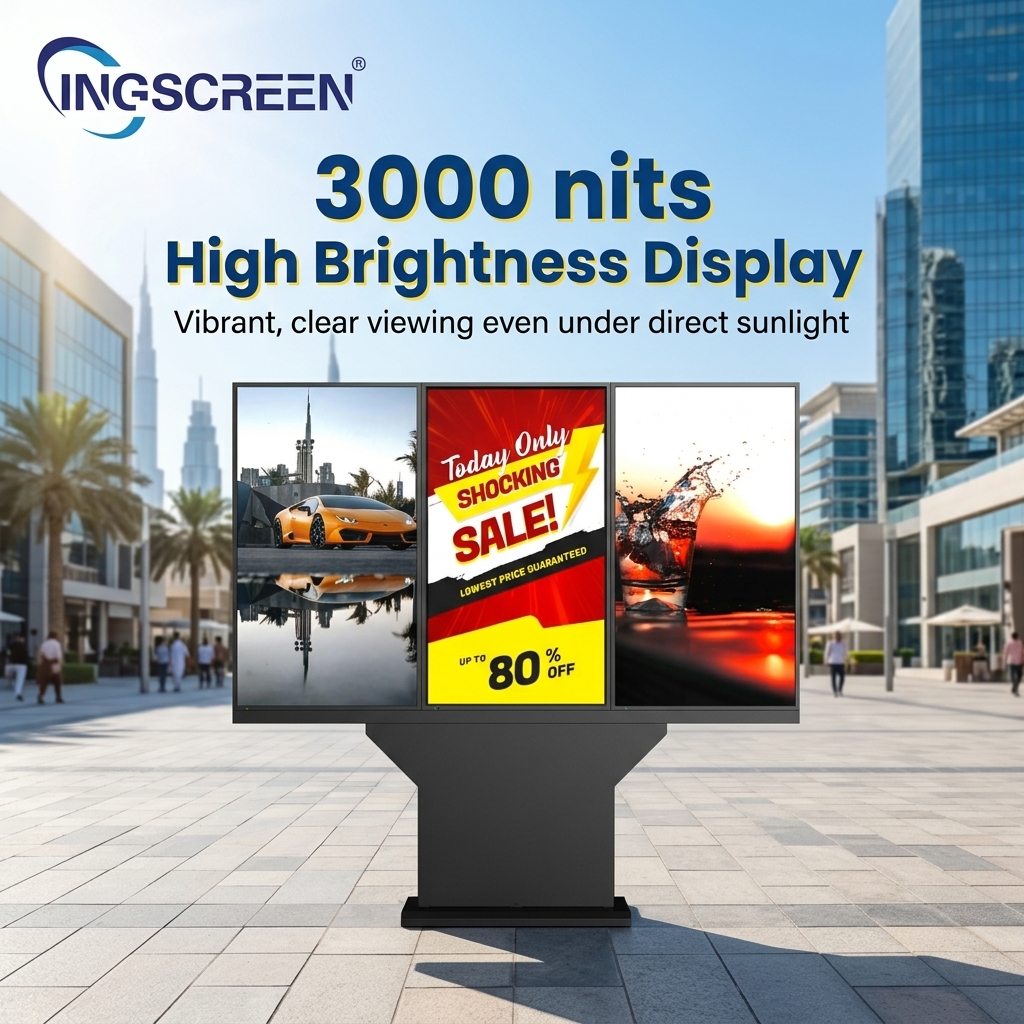
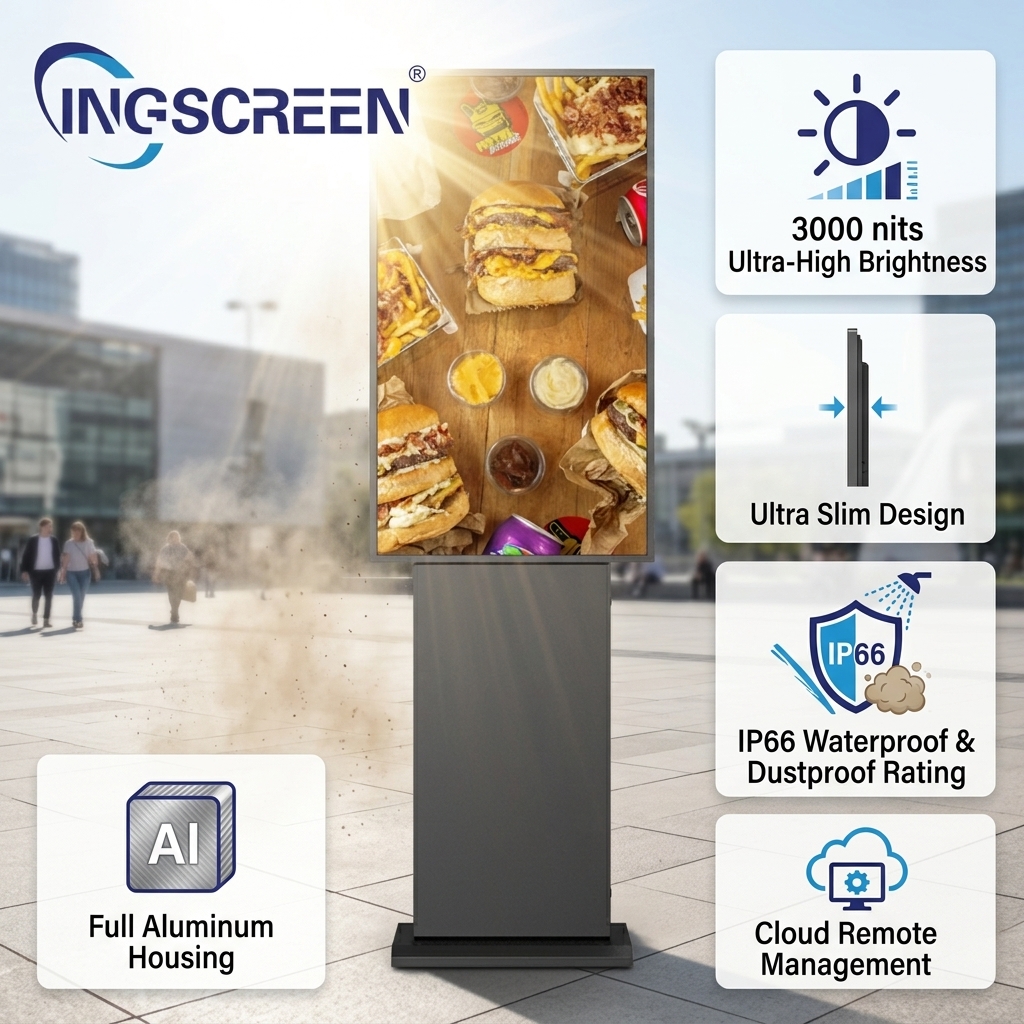
Site information for INGSCREEN's IP66 outdoor digital signage lists 3000 nits brightness, 4K resolution and automatic brightness adjustment (site-stated / subject to current confirmation). Automatic brightness matters in practice because it protects both readability at noon and viewer comfort at night, and it reduces the thermal load the cooling system has to manage.
Weather Protection: The IP Rating Is Only the Beginning
An IP66 rating indicates strong protection against dust ingress and powerful water jets. That is a floor, not a complete specification. For real-world installation, also confirm:
• Cable entries, glands and connector sealing, plus the drain path for condensation
• Housing and frame material, coating and corrosion resistance, especially for coastal or high-humidity sites
• Screen glass thickness and impact resistance for street-level positions
• Mounting method, wind-load assumptions and service access
Heat Management: The Real Engineering Problem
Heat, not water, takes most outdoor signage offline. Sun load plus the display's own heat output in a sealed enclosure creates internal temperatures far above ambient. The solution must be designed, not assumed.
Site information for the IP66 outdoor model lists operation across −20 °C to 85 °C with air cooling, heat exchange and optional air conditioning configurations. Each option fits a different climate and duty cycle: passive or heat-exchange solutions help in moderate climates and lower-brightness duty cycles, while active air conditioning may be needed for high-brightness units in hot climates running long daily hours. When you evaluate quotations, ask for the thermal design intent, the expected internal temperature at your design ambient, and the maintenance interval for filters or cooling components.
Content, Connectivity and Remote Management
Hardware fails quietly when content operations are ignored. Decide in advance:
• How content reaches the screen (network, USB, scheduled playlist, CMS)
• Whether playback continues if connectivity drops
• Who monitors screen health, and how alerts are delivered
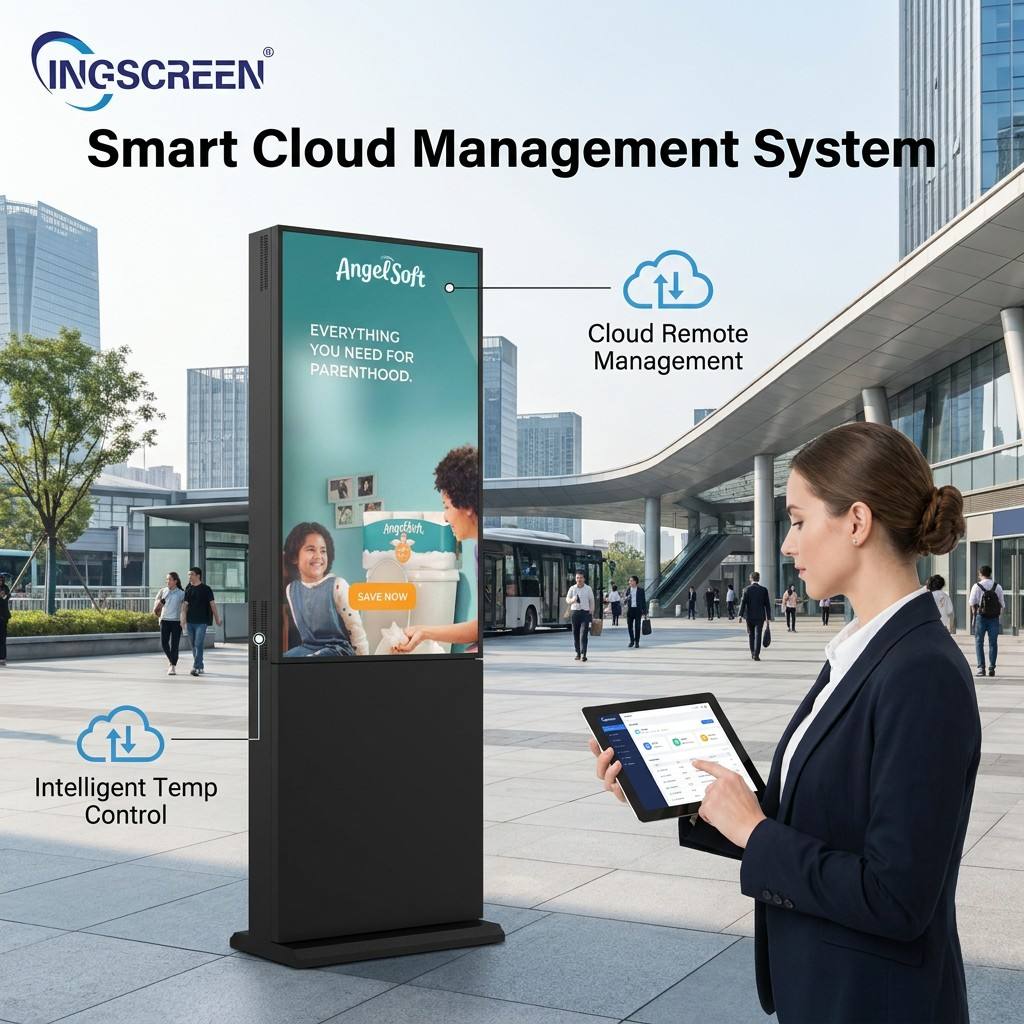
Site information lists remote management for the outdoor range. For a multi-site retail or media network, remote status, brightness control and reboot capability are worth more than a marginally better panel, because they determine how often a technician has to visit the site.
Commissioning and Maintenance Planning
Plan maintenance realistically. Street-level signage faces dust, exhaust, salt, pollen and cleaning chemicals. A quarterly visual inspection plus scheduled cleaning and filter checks is a reasonable starting point, adjusted for your environment.
Working With the Manufacturer
For distributors and integrators, the supplier relationship decides whether a signage project stays profitable over five years. Ask whether the housing, brightness variant, branding, packaging and language defaults can be adjusted for your market, because a high brightness digital signage for window display programme usually grows into a family of SKUs — single screens, floor-standing units, wall-mounted units — and consistency across that family reduces both spares cost and installer training.
INGSCREEN's product structure publicly includes indoor digital signage series, outdoor digital signage series, window display series, removable digital signage series, video walls. Model availability, brightness options and IP ratings must be confirmed against the current catalogue for your project; nothing above should be published as a specification for a specific SKU until the supplier confirms it in writing.
The commercial logic is simple. A window display earns its cost back only if it stays bright, stays online and stays readable for years. Specify for the worst hour of the worst day, plan the maintenance, and buy from a supplier who will answer thermal and sealing questions in writing rather than in slogans.
FAQ
Q: How many nits do I need for a shop window?
A: There is no single number. Orientation, glass in front of the screen, the reflective surface behind it and the ambient light curve all matter. Test a candidate unit on site at midday before committing to a fleet order, and specify automatic brightness adjustment.
Q: Do I need IP66 for a window-facing display?
A: Not always. IP66 protects against dust and powerful water jets and is intended for genuine outdoor exposure. A window-facing unit in a sheltered recess may only need robust dust protection and good thermal design — confirm the requirement with your installer.
Q: How do we keep an outdoor network running?
A: Contract the maintenance interval, stock the parts that fail most — cooling components, power supplies and module boards — and insist on remote monitoring so that faults are detected before customers see a blank screen.

