 EN
EN
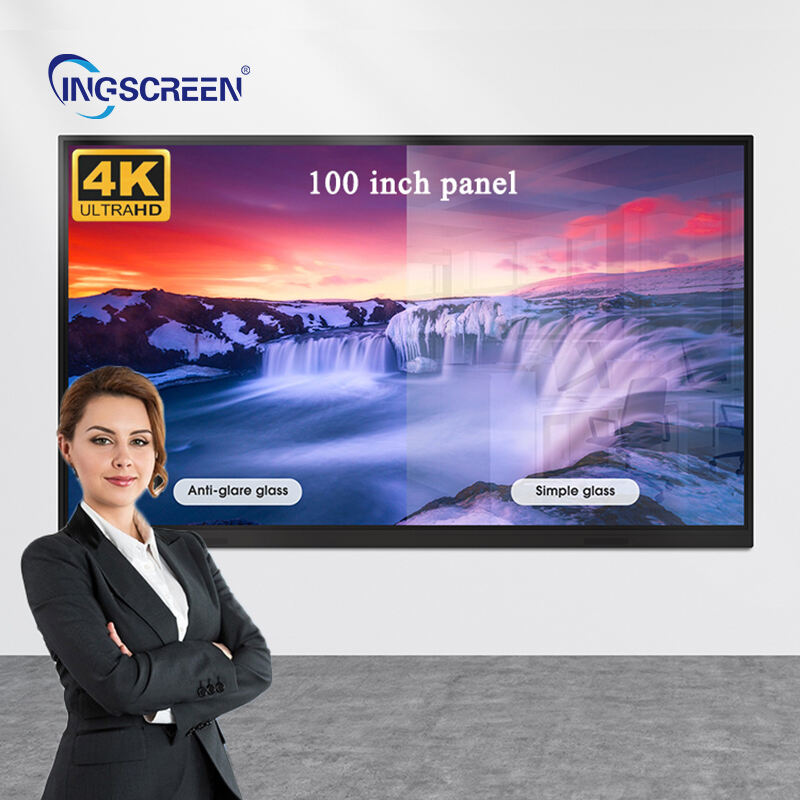
Modern educational environments are rapidly evolving, demanding innovative tools that enhance student engagement and facilitate dynamic learning experiences. Among the technological advances transforming classrooms worldwide, the interactive whiteboard has emerged as a cornerstone of contemporary education. This sophisticated technology combines traditional teaching methods with digital innovation, creating immersive learning environments that cater to diverse learning styles and promote active student participation. As educators seek effective solutions for collaborative learning, the interactive whiteboard continues to prove its value across various educational settings.

Enhanced Student Engagement and Participation
Visual Learning Revolution
The interactive whiteboard transforms static lessons into dynamic visual experiences that capture student attention and maintain focus throughout the learning process. Visual learners particularly benefit from the ability to display multimedia content, animations, and interactive graphics that make abstract concepts more tangible and understandable. Teachers can seamlessly integrate videos, images, and interactive simulations that bring textbook material to life, creating memorable learning moments that resonate with students long after the lesson ends.
Research consistently demonstrates that visual learning improves information retention rates by up to 65% compared to traditional lecture-based methods. The interactive whiteboard capitalizes on this advantage by providing vibrant displays and touch-responsive surfaces that encourage hands-on exploration. Students can manipulate objects on screen, solve problems collaboratively, and engage with educational content in ways that traditional blackboards simply cannot accommodate.
Multi-Sensory Learning Experiences
Beyond visual enhancement, the interactive whiteboard engages multiple senses simultaneously, creating rich learning experiences that accommodate various learning preferences. Touch-based interaction allows kinesthetic learners to physically manipulate digital content, while audio capabilities support auditory learners through integrated sound systems and multimedia presentations. This multi-sensory approach ensures that every student can connect with the material in meaningful ways.
The tactile nature of interactive whiteboard technology encourages students to move beyond passive observation and become active participants in their education. When students can touch, drag, and manipulate elements on the board, they develop deeper understanding through experiential learning. This hands-on approach transforms abstract mathematical equations, scientific processes, and historical timelines into interactive experiences that students can explore and understand through direct manipulation.
Collaborative Learning Opportunities
Group Problem-Solving Activities
The interactive whiteboard serves as a central focal point for group activities, enabling multiple students to work together on complex problems and projects. The large display format ensures that all participants can clearly see the work in progress, while touch-responsive capabilities allow several students to contribute simultaneously. This collaborative environment mirrors real-world teamwork scenarios, preparing students for future professional environments where cooperation and communication are essential skills.
Teachers can design activities that require students to work together, whether solving mathematical equations, analyzing literature, or conducting scientific experiments. The interactive whiteboard facilitates these collaborative efforts by providing digital tools for brainstorming, organizing ideas, and presenting findings to the class. Students learn to negotiate, compromise, and build upon each other's ideas while developing critical thinking and communication skills.
Real-Time Feedback and Assessment
The interactive whiteboard enables teachers to assess student understanding immediately through interactive polls, quizzes, and collaborative exercises. This real-time feedback mechanism allows educators to adjust their teaching strategies on the spot, ensuring that no student falls behind. Students can respond to questions directly on the board, participate in class votes, and demonstrate their understanding through interactive activities that provide immediate results.
This immediate feedback loop creates a responsive learning environment where both teachers and students can gauge progress continuously. When misconceptions arise, they can be addressed immediately rather than discovered later through traditional testing methods. The interactive whiteboard facilitates this ongoing assessment process by making student thinking visible and accessible to the entire class, promoting peer learning and collaborative problem-solving.
Technological Integration and Flexibility
Seamless Digital Resource Integration
Modern interactive whiteboard systems integrate effortlessly with existing digital resources, allowing teachers to incorporate online content, educational software, and multimedia materials into their lessons. This connectivity expands the classroom beyond physical boundaries, bringing global resources and real-time information directly to students. Teachers can access educational databases, virtual field trips, and interactive simulations that enhance curriculum content and provide current, relevant examples.
The flexibility of interactive whiteboard technology accommodates various teaching styles and subject requirements. Science teachers can display molecular structures and conduct virtual experiments, while language arts educators can analyze texts collaboratively and explore multimedia storytelling techniques. Mathematics instructors can use interactive graphing tools and geometric manipulatives that help students visualize complex concepts and relationships.
Adaptable Learning Environments
The interactive whiteboard adapts to different classroom configurations and teaching methodologies, supporting both traditional instructor-led lessons and student-centered learning approaches. Teachers can quickly switch between presentation modes, collaborative workspaces, and individual practice sessions, maintaining lesson momentum while accommodating diverse learning needs. This adaptability ensures that the technology enhances rather than constrains pedagogical creativity.
Furthermore, the interactive whiteboard supports differentiated instruction by allowing teachers to present information at various complexity levels and provide multiple pathways for student engagement. Advanced learners can explore extension activities while struggling students receive additional support through visual aids and interactive tutorials. This personalized approach ensures that all students can access curriculum content at appropriate levels while working toward common learning objectives.
Professional Development and Teaching Enhancement
Improved Lesson Planning and Delivery
Teachers who incorporate interactive whiteboard technology into their practice often report enhanced lesson planning capabilities and improved instructional delivery. The digital nature of interactive whiteboard lessons allows educators to save, modify, and reuse content across multiple classes and academic years. This efficiency enables teachers to focus more time on student interaction and less time on repetitive preparation tasks.
The interactive whiteboard also supports professional collaboration among educators, as teachers can share lesson plans, activities, and resources digitally. This collaborative approach fosters innovation and best practice sharing, ultimately benefiting student learning outcomes. Experienced teachers can mentor newcomers by sharing proven interactive activities, while innovative educators can disseminate creative teaching strategies throughout their institutions.
Enhanced Communication with Stakeholders
Interactive whiteboard technology facilitates improved communication between teachers, students, and parents by providing visual documentation of learning activities and student progress. Teachers can capture and share lesson content, student work, and collaborative projects, creating comprehensive portfolios that demonstrate learning growth over time. This transparency builds trust and engagement among all educational stakeholders.
Additionally, the interactive whiteboard enables remote learning capabilities when necessary, allowing teachers to broadcast lessons to students who cannot attend in person. This flexibility proved invaluable during recent global disruptions and continues to support students with various attendance challenges. The technology ensures educational continuity while maintaining the interactive and collaborative elements that make learning engaging and effective.
Long-Term Educational Benefits
Digital Literacy Development
Regular interaction with interactive whiteboard technology helps students develop essential digital literacy skills that are increasingly important in academic and professional contexts. Students learn to navigate digital interfaces, manipulate multimedia content, and collaborate effectively using technology tools. These skills translate directly to success in higher education and future careers where technological proficiency is expected.
The interactive whiteboard serves as a bridge between traditional learning methods and modern digital environments, helping students transition comfortably between different technological platforms. This gradual exposure to educational technology builds confidence and competence that supports lifelong learning and adaptation to evolving technological landscapes.
Critical Thinking and Problem-Solving Skills
Interactive whiteboard activities often require students to analyze information, synthesize ideas, and solve complex problems collaboratively. These higher-order thinking skills are developed through engaging activities that challenge students to think creatively and work together toward common goals. The visual and interactive nature of the technology supports these cognitive processes by making abstract thinking more concrete and accessible.
Students who regularly use interactive whiteboard technology demonstrate improved analytical abilities and enhanced creative problem-solving approaches. The collaborative nature of many interactive activities teaches students to consider multiple perspectives, evaluate evidence, and construct well-reasoned arguments. These critical thinking skills are essential for academic success and informed citizenship in an increasingly complex world.
FAQ
How does an interactive whiteboard differ from a regular projector and screen setup
An interactive whiteboard provides touch-responsive capabilities that allow users to manipulate content directly on the display surface, while traditional projector setups only display static images. The interactive whiteboard enables collaborative activities, real-time annotation, and hands-on learning experiences that engage students actively in the learning process. Additionally, interactive whiteboards often include built-in software and connectivity features that expand their educational capabilities beyond simple projection.
What technical support is typically required for interactive whiteboard implementation
Interactive whiteboard implementation typically requires initial installation by qualified technicians, basic teacher training on software functionality, and ongoing technical support for troubleshooting. Most educational institutions benefit from having dedicated IT staff familiar with the specific interactive whiteboard model and its integration with existing network systems. Regular software updates and calibration maintenance ensure optimal performance and longevity of the investment.
Can interactive whiteboards accommodate students with special learning needs
Interactive whiteboards offer excellent accessibility features for students with diverse learning needs, including adjustable height positioning, voice recognition capabilities, and compatibility with assistive technologies. The multi-sensory nature of interactive whiteboard activities supports students with various learning differences, while the visual and tactile feedback can be particularly beneficial for students with attention difficulties or processing challenges. Many interactive whiteboard systems include built-in accessibility tools and can be customized to meet specific accommodation requirements.
What is the typical lifespan and return on investment for educational interactive whiteboards
Quality interactive whiteboards typically provide 8-10 years of reliable service with proper maintenance, making them a cost-effective long-term investment for educational institutions. The return on investment includes improved student engagement, enhanced learning outcomes, increased teacher efficiency, and reduced need for traditional teaching materials. Many schools report that the collaborative learning benefits and digital literacy development justify the initial investment within the first few years of implementation.
Table of Contents
- Enhanced Student Engagement and Participation
- Collaborative Learning Opportunities
- Technological Integration and Flexibility
- Professional Development and Teaching Enhancement
- Long-Term Educational Benefits
-
FAQ
- How does an interactive whiteboard differ from a regular projector and screen setup
- What technical support is typically required for interactive whiteboard implementation
- Can interactive whiteboards accommodate students with special learning needs
- What is the typical lifespan and return on investment for educational interactive whiteboards

