
 EN
EN
Kiosk customization is no longer a luxury reserved for large enterprises — it has become a practical necessity for businesses across virtually every sector. Whether you operate in retail, healthcare, hospitality, or finance, a generic off-the-shelf kiosk rarely meets the specific demands of your environment, your customers, or your compliance obligations. Understanding what drives effective kiosk customization helps decision-makers invest wisely and avoid costly redesigns after deployment.
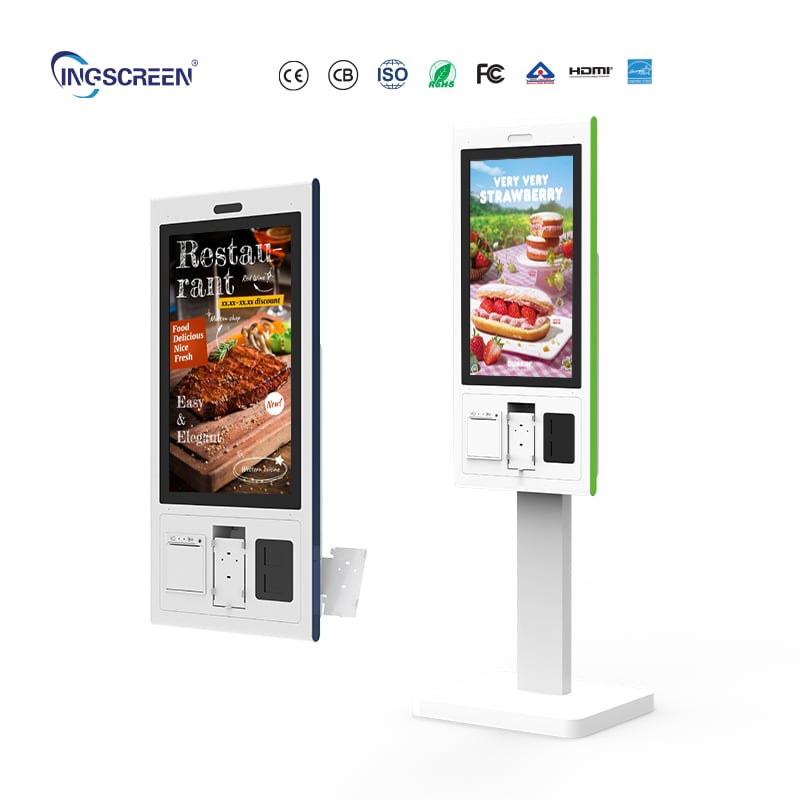
Every industry carries its own set of requirements when it comes to kiosk customization. The hardware form factor, software stack, user interface logic, and integration capabilities must all align with operational realities on the ground. This article walks through the most critical considerations you should evaluate before committing to a kiosk customization project, so that your final solution delivers measurable value rather than functional compromise.
Hardware and Physical Design Considerations
Form Factor and Enclosure for the Environment
One of the first decisions in any kiosk customization project is the physical form factor. A kiosk deployed in a busy airport terminal faces very different physical demands than one installed in a quiet hospital lobby. Outdoor kiosk customization must account for weather resistance, vandal-proof enclosures, and thermal management to handle extreme temperatures. Indoor kiosk customization, on the other hand, often prioritizes a sleeker aesthetic and a smaller footprint that integrates with the existing interior design.
In retail environments, kiosk customization typically favors freestanding floor units with branded color schemes and large touchscreens. In healthcare, kiosk customization often demands hygienic surfaces, antimicrobial coatings, and accessible height adjustments to serve patients with mobility challenges. The enclosure material, mounting style, and dimensional profile are therefore not aesthetic choices alone — they are functional specifications driven by the industry context.
Peripheral Hardware Integration
Kiosk customization almost always involves selecting and integrating specific peripheral hardware. A payment kiosk in a parking facility requires a card reader, a ticket dispenser, and possibly a cash-handling module. A check-in kiosk at a hotel requires a passport scanner, a key card encoder, and a receipt printer. Each peripheral adds complexity to the kiosk customization process, requiring careful attention to compatibility, cable management, and firmware alignment.
Selecting peripherals that share a common communication protocol simplifies the kiosk customization workflow considerably. Vendors who offer modular peripheral bays make it easier to upgrade or swap components later without a full hardware redesign. When evaluating suppliers for your kiosk customization project, always confirm what peripheral ecosystems are supported natively and what requires custom driver development.
Software and User Experience Customization
Interface Design for the Target User
Software-level kiosk customization is often where the most impactful decisions are made. The user interface must be tailored to the specific audience interacting with the kiosk on a daily basis. In a fast-food restaurant, kiosk customization focuses on intuitive menu navigation, upsell prompts, and rapid transaction completion. In a government service center, kiosk customization must prioritize accessibility, multilingual support, and clear instructional flows that accommodate users with limited digital literacy.
Font size, contrast ratio, button placement, and workflow logic are all components of software-level kiosk customization that should be validated through real user testing. A common mistake is designing the interface based on internal assumptions rather than observed user behavior. Investing in usability testing as part of the kiosk customization process can prevent frustrating user experiences that drive customers away rather than serving them efficiently.
Backend Integration and Data Management
Enterprise-grade kiosk customization requires deep integration with backend systems. In retail, kiosk customization must connect to inventory management platforms, loyalty program databases, and payment gateways. In healthcare, kiosk customization must interface with electronic health record systems and appointment scheduling software while maintaining strict compliance with patient data protection regulations. The depth of these integrations directly affects the complexity and cost of the kiosk customization project.
API compatibility, data encryption standards, and real-time synchronization capabilities are all technical dimensions of kiosk customization that should be scoped clearly during the planning phase. Poorly defined integration requirements are among the most common reasons kiosk customization projects run over budget and behind schedule. Engaging your IT and compliance teams early in the kiosk customization process significantly reduces integration risk.
Industry-Specific Compliance and Operational Requirements
Regulatory and Accessibility Standards
Kiosk customization in regulated industries must address applicable legal and accessibility standards from the earliest design stage. In financial services, kiosk customization must comply with data security standards such as PCI DSS for payment processing. In healthcare, kiosk customization is shaped by HIPAA requirements that dictate how patient information is displayed, stored, and transmitted. Ignoring these compliance dimensions during kiosk customization leads to expensive retrofitting or even regulatory penalties after deployment.
Accessibility is another non-negotiable dimension of kiosk customization in public-facing environments. ADA compliance in the United States, for instance, sets specific requirements for screen height, audio output, tactile controls, and reach ranges. Thoughtful kiosk customization incorporates these requirements into the original hardware and software design rather than treating them as afterthoughts. An accessible kiosk customization approach not only meets legal obligations but also broadens your serviceable user base.
Operational Durability and Maintenance Planning
Long-term operational success depends heavily on how well the kiosk customization accounts for durability and ongoing maintenance. High-traffic environments such as transit hubs or shopping malls demand kiosk customization that prioritizes robust component selection, easy-access service panels, and remote diagnostics capability. Kiosk customization that overlooks maintainability can lead to extended downtime, frustrated users, and disproportionate service costs over the product lifecycle.
Remote management tools are increasingly a standard expectation in kiosk customization across industries. The ability to push software updates, monitor hardware health, and restart services remotely reduces dependency on on-site technicians. When evaluating kiosk customization solutions, verify that the platform includes robust remote device management capabilities suited to the scale and geographic spread of your deployment.
FAQ
How long does a typical kiosk customization project take?
The timeline for a kiosk customization project varies widely depending on complexity. A straightforward kiosk customization involving interface branding and peripheral configuration may take four to eight weeks. A full-scale kiosk customization with custom enclosures, deep backend integrations, and compliance testing can take four to six months or longer. Defining clear requirements upfront is the most effective way to shorten the kiosk customization timeline.
What is the most commonly overlooked aspect of kiosk customization?
Many businesses focus heavily on visual design during kiosk customization and underestimate the importance of backend integration planning. Software compatibility issues and data management gaps are the most frequent sources of delay and budget overrun in kiosk customization projects. Allocating sufficient discovery time for system integration is critical to a successful kiosk customization outcome.
Can kiosk customization be scaled across multiple locations?
Yes, kiosk customization can be designed with multi-site scalability in mind from the start. A well-architected kiosk customization platform uses centralized content management and remote device control to maintain consistency across locations. Choosing a kiosk customization solution that supports scalable deployment from the beginning avoids costly re-engineering when your rollout expands.

