
 EN
Most import problems do not start with a missing certificate. They start with a certificate that does not match the product in the container. The model number on the report differs from the label, the power supply was changed after testing, a wireless module was swapped, the manual is in the wrong language, or the marking on the unit does not match what customs sees on the invoice. For interactive display certification for importers, the discipline is consistency: the same model identity must follow the product from test lab to label to customs entry to warranty claim.
This checklist is for importers of interactive flat panels, digital signage, kiosks and related display hardware. It is not legal advice — requirements differ by market and change over time, so confirm the specifics with your customs broker and a local compliance advisor before each shipment.
Step 1 — Map the Product Identity First
Create a single specification sheet with the exact model designation, panel size, mainboard platform, power supply, software build, peripheral modules and country variant. Every document you request must reference this identity.
Step 2 — Collect the Core Document Set
For each model you intend to import, request:
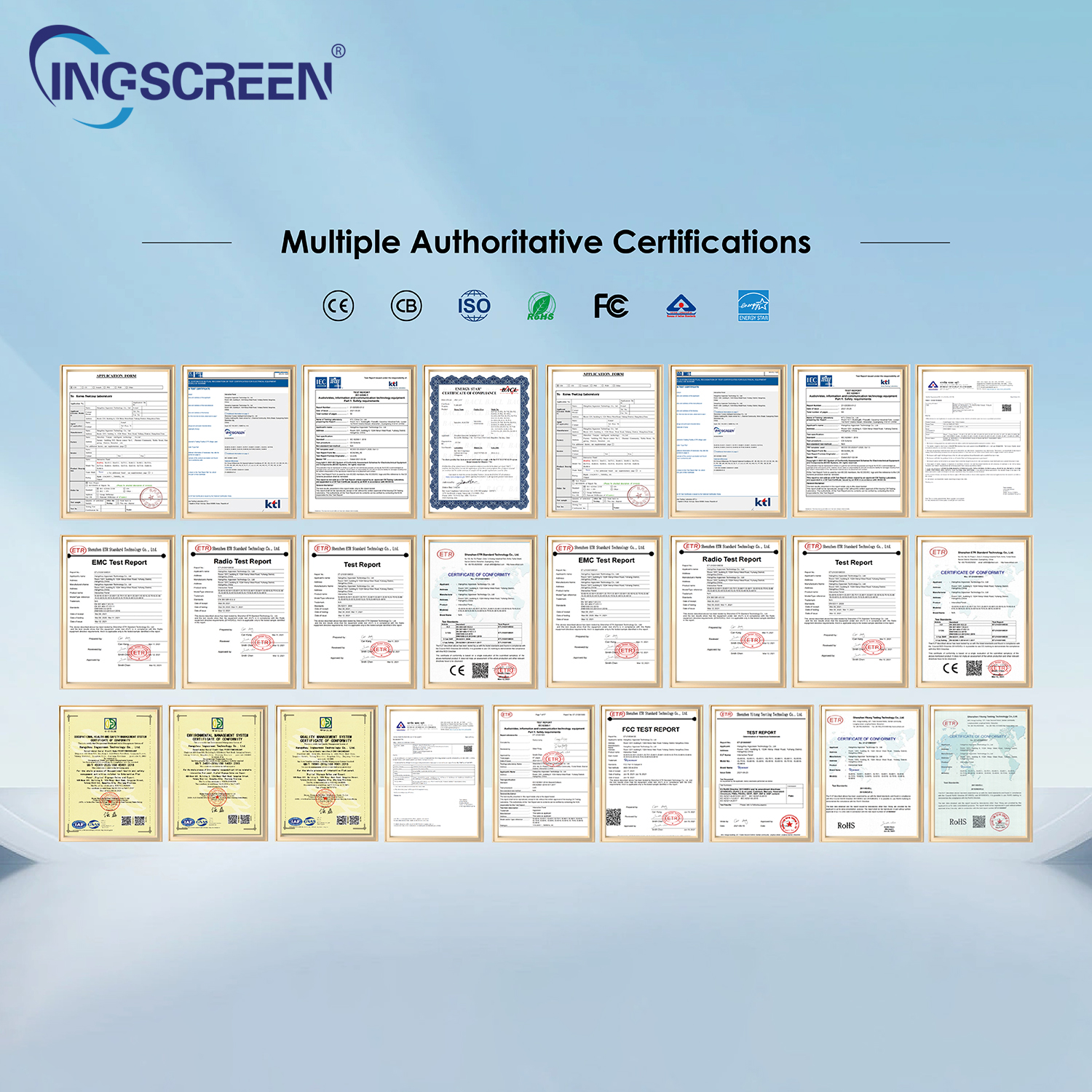
- Test reports for the applicable safety and electromagnetic standards, issued to the correct model.
- Declarations of conformity or equivalent supplier declarations, signed and dated, naming the responsible legal entity.
- Certificates for the markets you sell into, with certificate numbers you can verify on the issuing body's register.
- RoHS and material compliance statements, plus any restricted-substance documentation your market requires.
- Radio and wireless documentation if the unit includes Wi-Fi, Bluetooth or cellular modules, including the module approvals relied upon.
- Energy and eco-design documentation where applicable to displays in your market.
- Battery documentation if the unit or its accessories contain batteries.
- Packaging documentation: carton marking, recycling information and, for wooden packaging, treatment evidence.
Step 3 — Verify Model-Name and Variant Consistency
This is where most importers lose time. Confirm that the model number on the test report matches the nameplate, the invoice and the packing list; that rated voltage, frequency and power consumption match the variant shipped; that critical components named in the report — power supply, wireless module, panel — match what is built; that any referenced firmware version matches the delivered image; and that the accessory list matches the declaration.
If any of these differ, request a written explanation before shipment, not after arrival.
Step 4 — Labelling, Manuals and Market Markings
Importers are usually the party responsible for what the label says in the destination market. Confirm:
- Importer or responsible-person name and address on the product label
- Market marking applied correctly and legibly, in the required position
- Local-language manual, safety information and quick-start guide
- Energy label or recycling symbol where required
- Serial number scheme that supports traceability for warranty and recall
Write the label artwork and manual language into the purchase order, and treat an unapproved label as a reason to hold the shipment.
Step 5 — Customs, Duties and Trade Documentation
Prepare the commercial document set early: commercial invoice with detailed line descriptions, packing list, bill of lading or airway bill, certificate of origin where a preferential rate applies, and any market-specific clearance documents requested by your broker. Confirm who is the importer of record, and whether the agreed Incoterms place the import declaration on you or on the seller. The site indicates INGSCREEN discusses DDP and FOB terms with buyers (site-stated / subject to current confirmation); regardless of the term chosen, obtain the compliance document set from the seller before the goods leave.
Step 6 — Incoming Inspection and Document Archive
Inspect on arrival against the specification sheet: model identity, label, accessories, cosmetic condition, power-up and touch test on a sample basis. Photograph the nameplate and packaging. Then archive, per model: specification sheet, test reports, declarations, certificates, label artwork, manual language version, invoice, packing list and inspection record.
Step 7 — Warranty, Spares and Post-Sale Obligations
Before the first shipment, confirm in writing the warranty period and coverage, the location from which spare parts ship, the RMA process and who bears return freight, and the expected parts availability window for the model. Site information indicates a 2-year warranty and spare-parts support (site-stated / subject to current confirmation); because terms can vary by project, get the exact commitment for your order rather than relying on a general statement. Also clarify which party handles field service in your market and how firmware updates are distributed.
Compliance is not a document collection exercise; it is a chain of evidence that must remain unbroken from design to delivery. Importers who treat interactive display certification for importers as part of the purchase specification — not as paperwork to be dealt with at the port — avoid the two most expensive outcomes in this business: a container held at customs, and a product recall with no traceable test history.
FAQ
1. Can we rely on the supplier's certificates for our shipment?
No. Certificates must cover your exact model, variant and configuration, and must be verifiable. Use the supplier's documents as a starting point, then confirm the certificate number, covered models and validity with the issuing body.
2. What changes require re-testing?
Any change that can affect safety, emissions or wireless behaviour — power supply, mainboard, panel, wireless module, or mechanical changes affecting heat and clearances. Ask the supplier to notify you in writing before any such change, and make that a contract term.
3. Who is responsible for import compliance?
Usually the importer of record, which is normally the buyer. Even under terms where the seller handles freight, the compliance obligations in your market generally stay with you — so keep the document archive and verify everything before shipment.

