Ultra HD visuals with 178° wide viewing angle.
Ultra-slim full metal body with narrow bezel.
Supports standalone, mobile, LAN, cloud & multi-screen sync.
Scheduled power/playback for stable 7×24h operation.
Full compatibility with H.265/H.264, MP3, JPG, BMP & more.
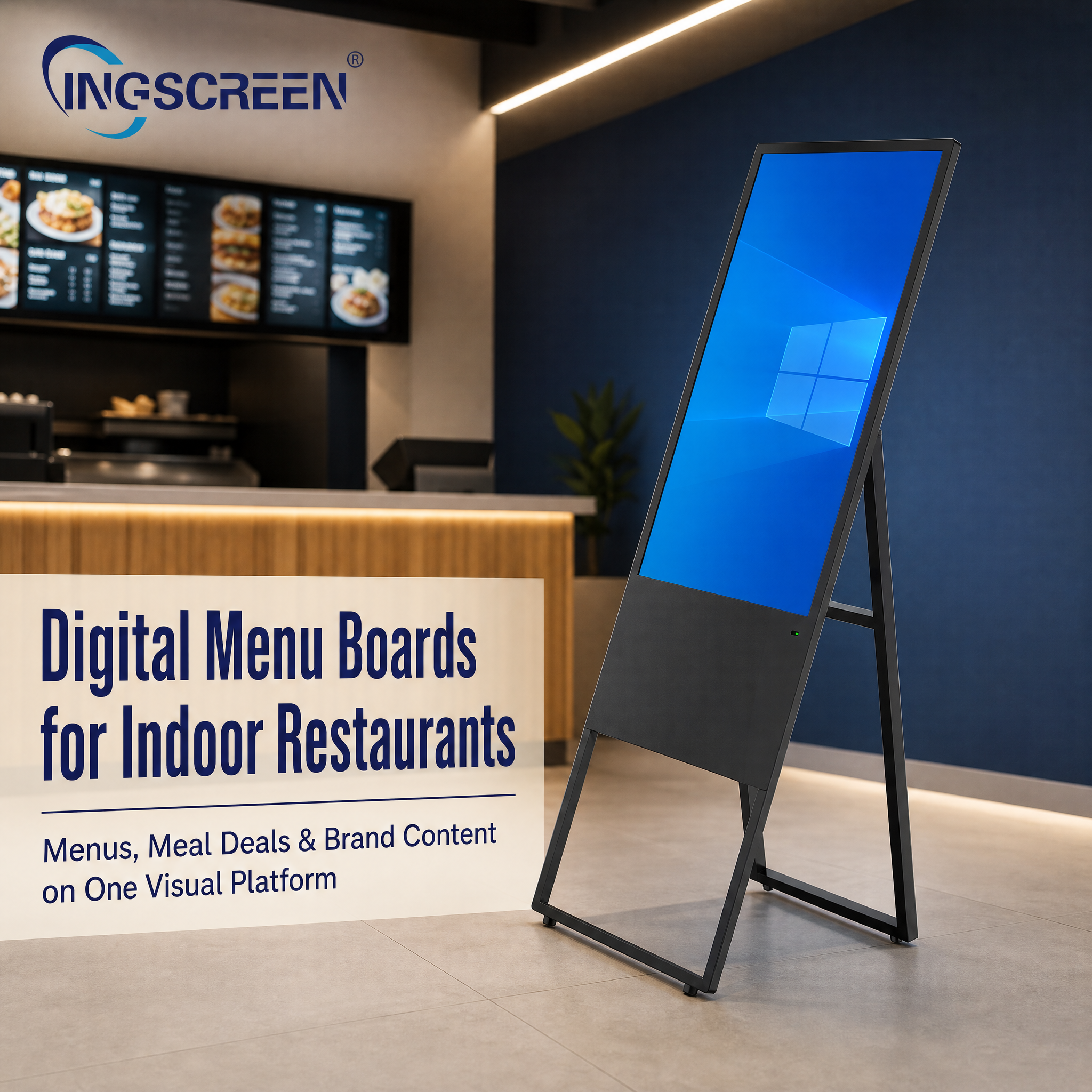
Restaurant buyers commonly evaluate how quickly menus can change, whether branding is consistent across locations, readability during peak periods, content-management options, operating stability, placement and rollout cost. Typical buyers include restaurant chains, QSRs, cafés, restaurant designers, system integrators and regional distributors.
Common purchase triggers include frequent price changes, seasonal product launches, store renovation or replacement of static lightboxes. This is an industry scenario analysis, not an INGSCREEN customer result.
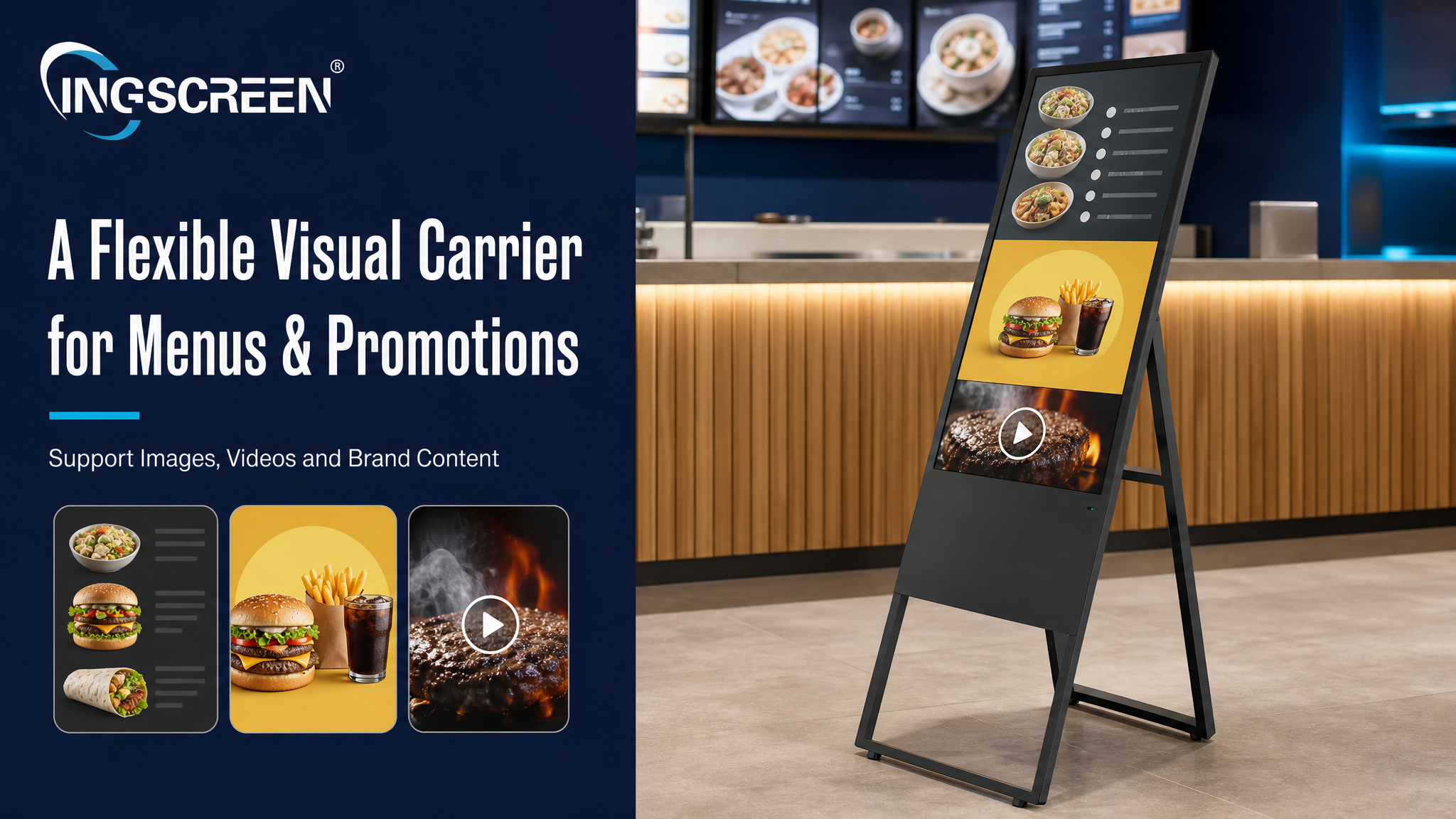
•Slow menu updates:
Printed menus, lightbox graphics and static posters require manual production when prices, products or promotions change. Public industry material identifies fast content changes and avoiding reprinting as common digital menu-board use cases.
•Inconsistent execution across stores:
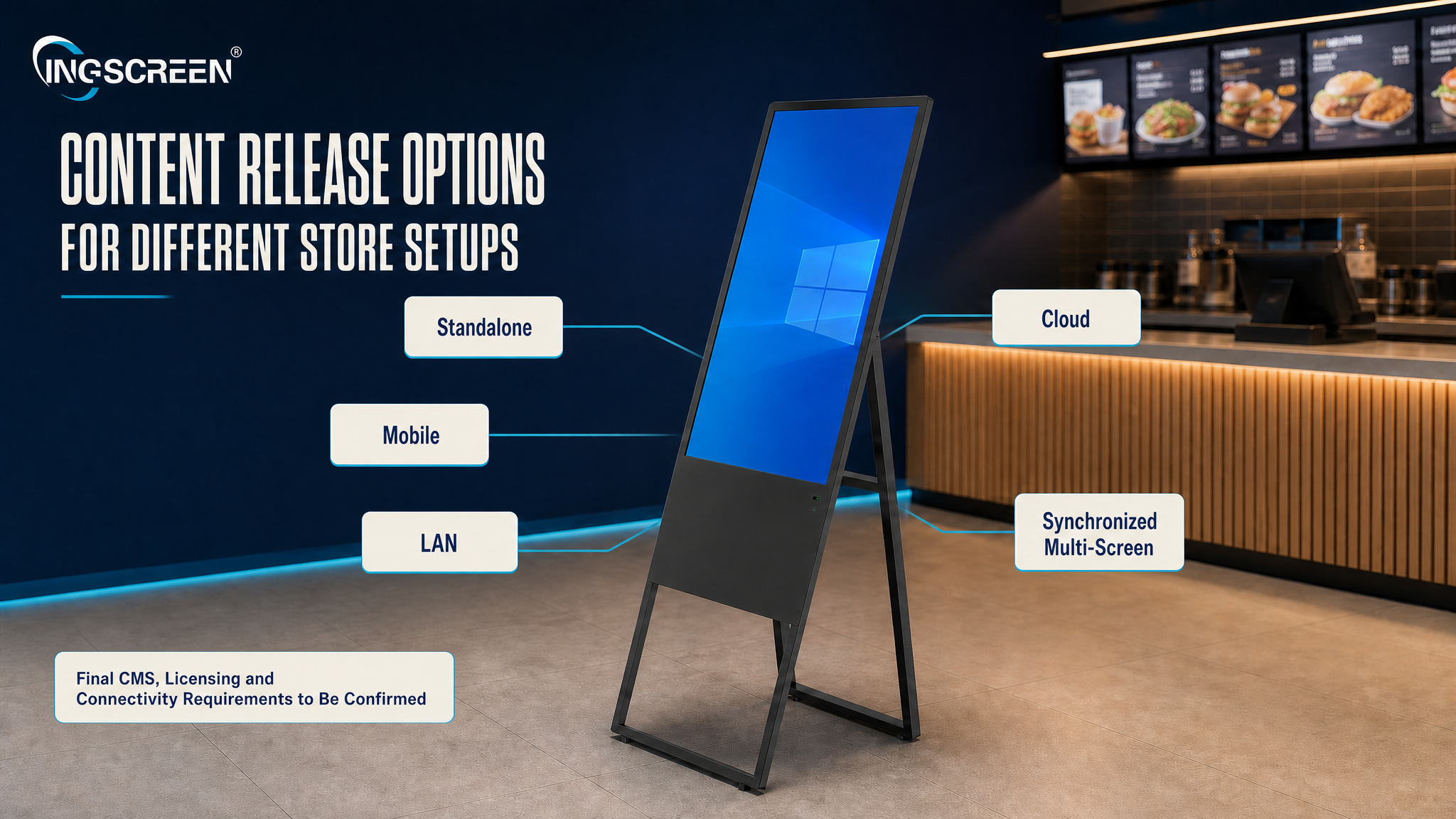
Chain restaurants need consistent brand colors, menu order and daypart campaigns. LAN, cloud management and synchronized playback can be considered as publishing paths, but the actual platform, permissions and connectivity requirements must be confirmed.
•Different viewing positions:
Ordering areas, entrances and waiting zones may have different viewing angles. The supplied specification lists a 178° viewing angle and 400 cd/m² typical brightness as indoor selection references. Final readability still depends on ambient light, font size, contrast and placement.
•Nutrition and allergen information risk:
Menu information must be reviewed by the restaurant according to the regulations and internal policies of the target market. The display can present text, images and video; it does not constitute food-regulation advice or automatic nutrition-data validation.
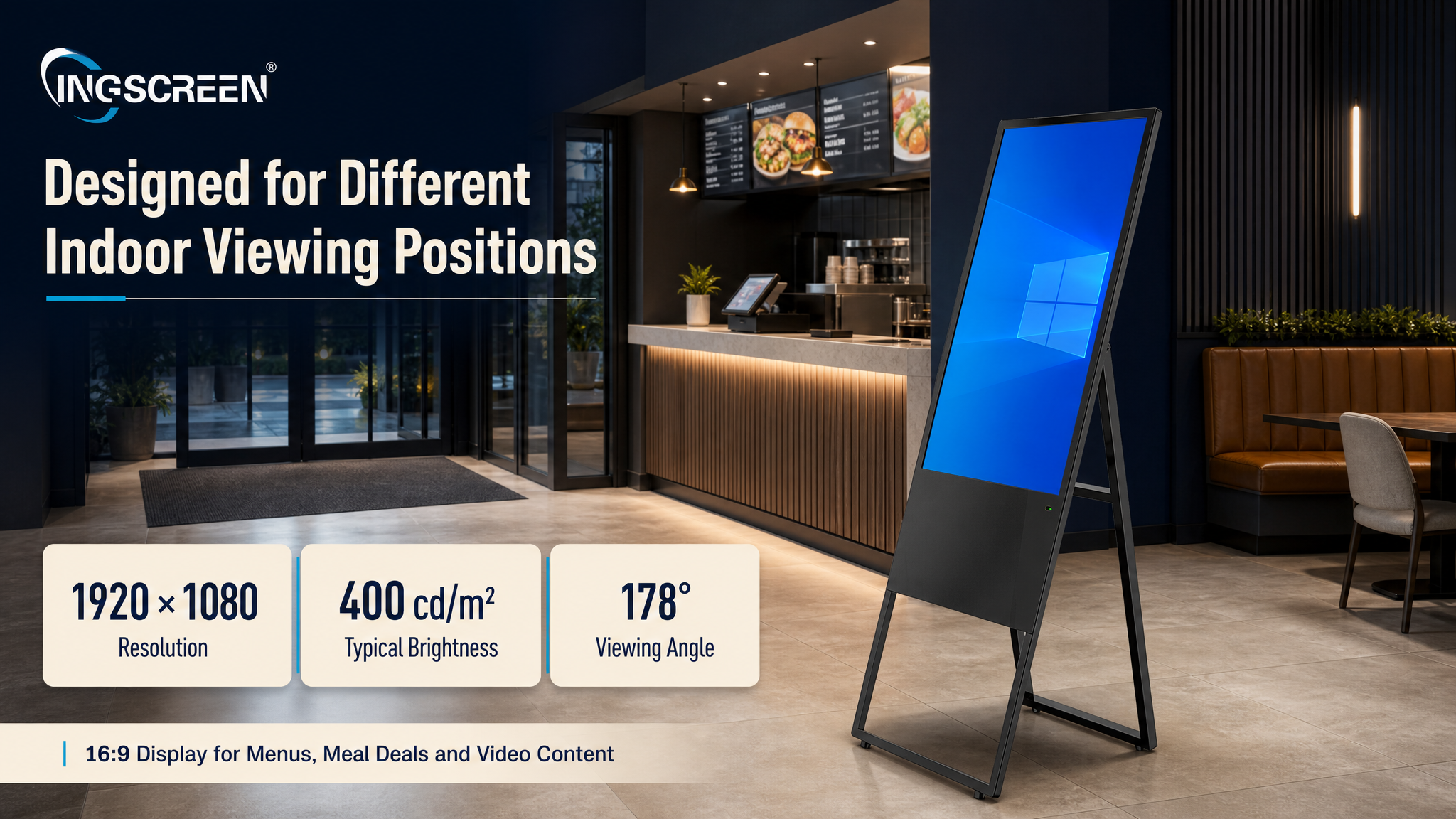
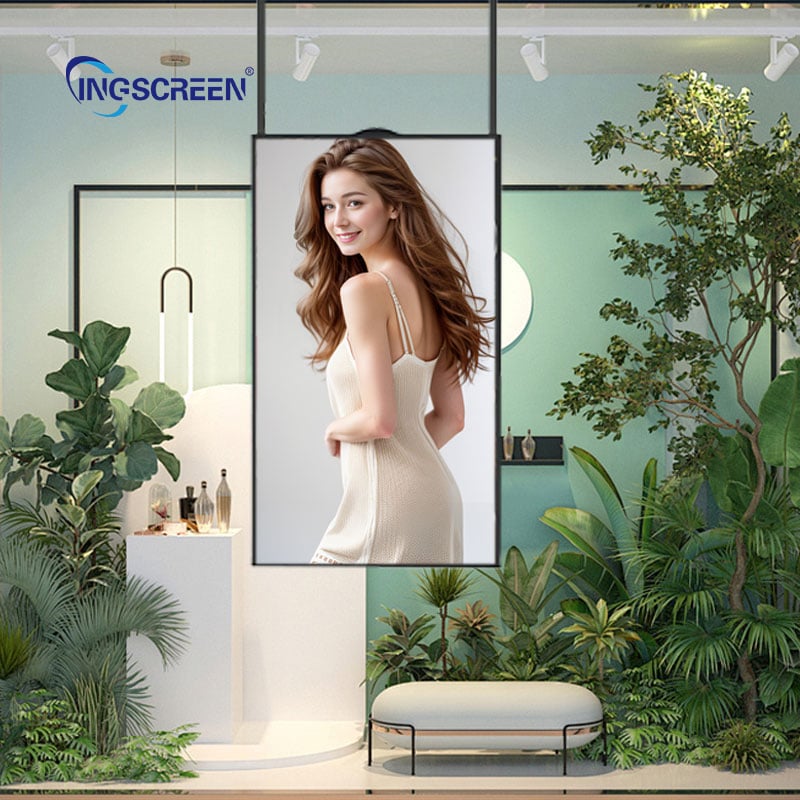
Use the IS-AD43FP(-H), indoor floor-standing digital signage models as hardware candidates for restaurant entrances, ordering areas or waiting zones. The project can combine requirement confirmation, content templates, network setup, pilot testing and multi-store rollout.
The 43-inch specification is relatively complete. Public information about INGSCREEN’s R&D, production and after-sales teams can support supplier due diligence, subject to pre-publication confirmation.
• 43 inch options can address different viewing distances and store layouts. The 16:9 ratio is suitable for menus, meal-deal images, video and brand content.
• The supplied specification lists 1920×1080 resolution, 400 cd/m² typical brightness, 178° viewing angle, 60 Hz and built-in 8Ω/5W×2 speakers. Confirm the exact configuration for the quoted model.
• A full sheet-metal sprayed structure, slim body and narrow bezel can suit indoor commercial spaces. Anti-glare, anti-fingerprint performance and a specific protection rating were not stated in the supplied specification.
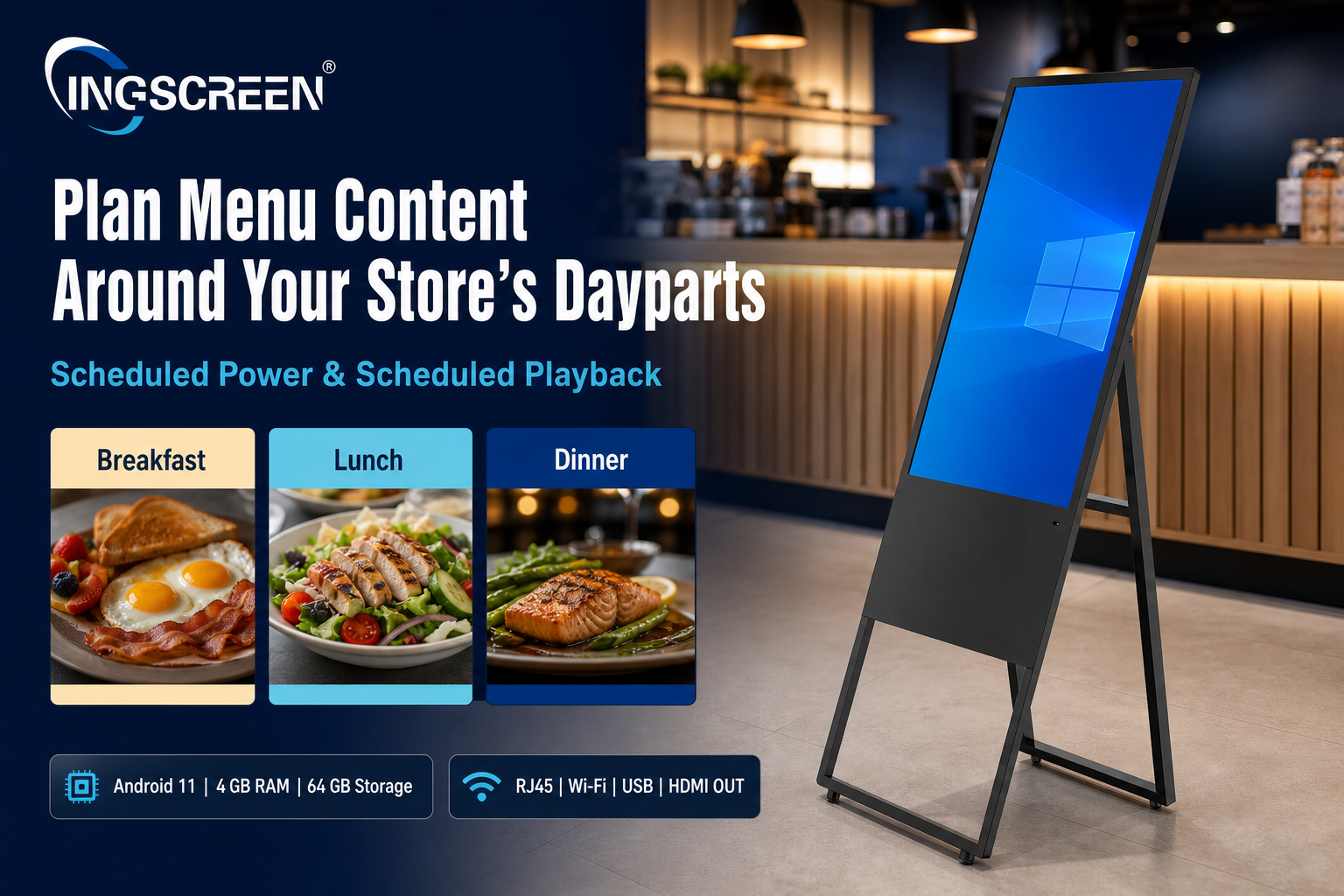
• Android 11, quad-core ARM Cortex-A55, 4 GB RAM and 64 GB storage can support common image, video and audio content. The specification lists H.264/H.265, MP3, JPG and BMP compatibility.
• Standalone, mobile, LAN, cloud and synchronized multi-screen release modes provide several possible content workflows. Confirm the CMS name, license model, offline playback, content approval, logs, remote monitoring and POS/API integration.
• Scheduled power and scheduled playback can support breakfast, lunch and dinner dayparts. The phrase”7×24-hour operation”is treated as a product description and should not replace an independent continuous-operation test report.
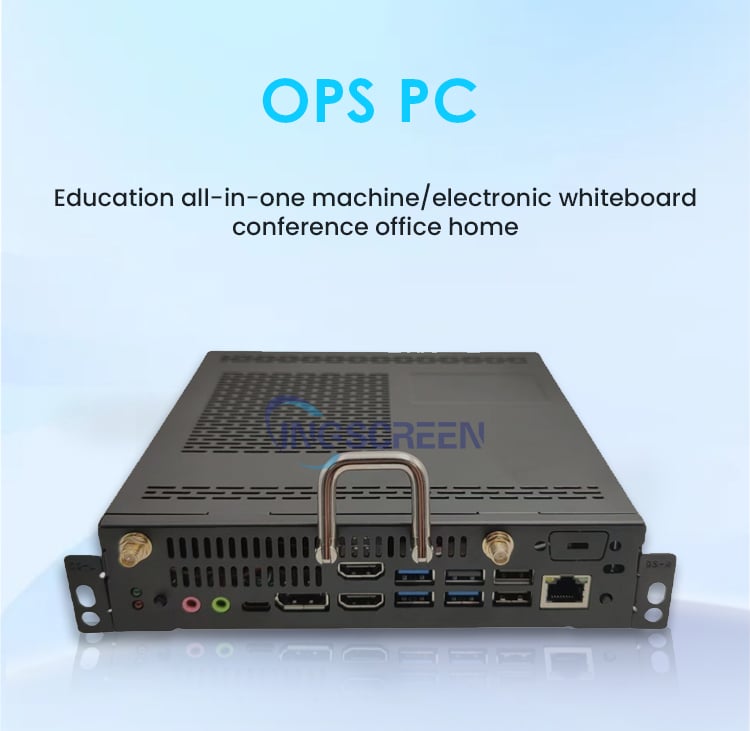
• AC100-240 V, 50/60 Hz, RJ45, Wi-Fi, USB and HDMI OUT provide deployment options. Plugs, local electrical requirements and network-security settings must be confirmed.
Target outcomes, not verified customer results: The solution is intended to support centralized management of menu and promotional content by store and daypart, reduce manual replacement of static materials, provide a flexible visual carrier for new products and meal deals, and support nutrition or allergen information supplied and approved by the restaurant.
Suggested KPIs include content update time, store publishing success rate, playback incident rate, device availability, qualified inquiries and quote conversion. Set target values against the buyer’s baseline.
No historical customer sales uplift, traffic uplift or ROI data is available for this case.



 EN
EN